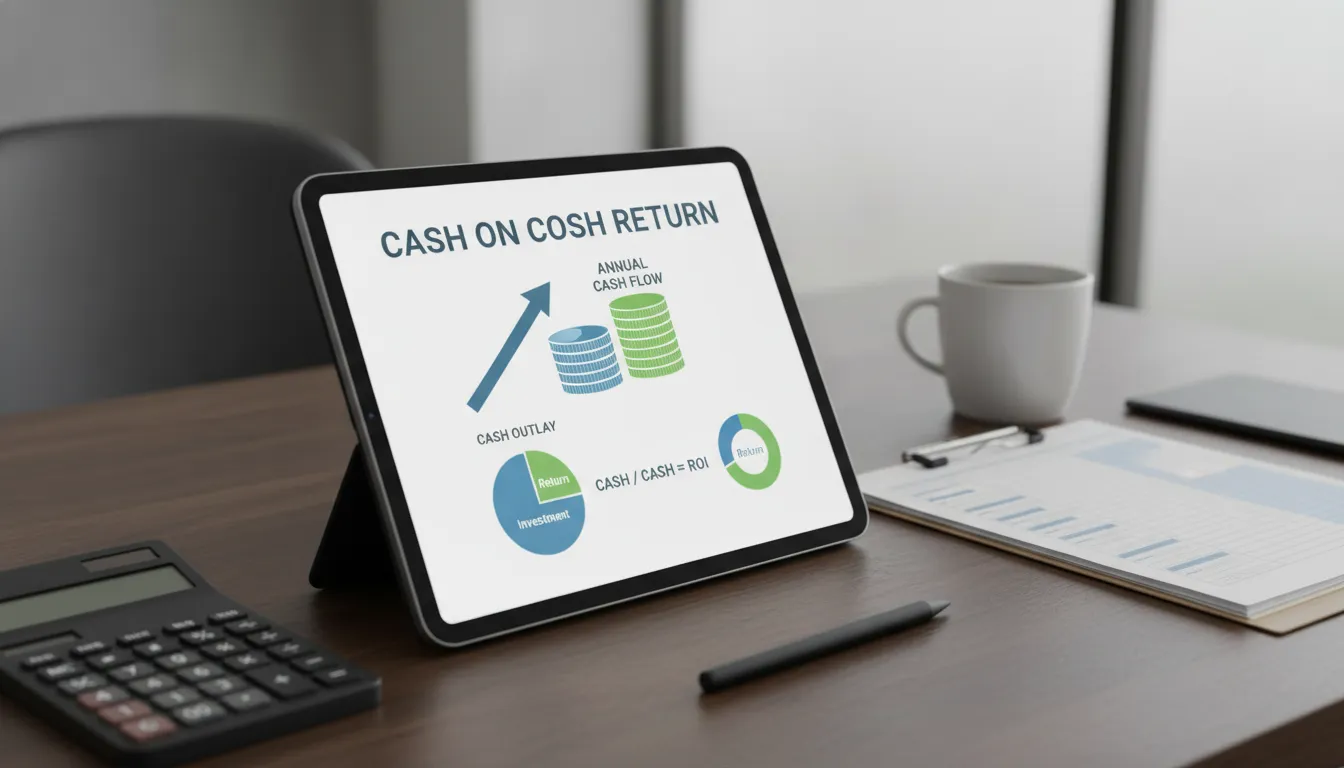
Cash on Cash Return: How to Judge a Good Return
A rental property can bring in steady rent and still leave you with less cash than expected after bills and mortgage payments. That’s why it helps to look beyond the monthly rent when assessing an investment. Cash on cash return compares a property’s annual pre-tax cash flow with the cash you invested to buy and prepare it. The calculation is straightforward, but the estimates behind it matter. Miss a repair, vacancy, or closing cost, and the result may give you a misleading impression. Learn how to calculate cash on cash return, what it leaves out, and how Worcester-area property owners can use clear records to make more informed comparisons.
Key Takeaways
- Use the full investment amount: Include your down payment, closing costs, and upfront work when calculating cash-on-cash return.
- Check the assumptions behind the number: Estimate rent, vacancy, operating costs, and mortgage payments carefully, then compare projections with actual records.
- Look beyond the percentage: Review cash-on-cash return alongside measures of property value, loan paydown, and tax impact for a more complete assessment.
What Is Cash-on-Cash Return?
Cash-on-cash return measures a rental property’s annual pre-tax cash flow as a percentage of the cash you invested. It can help you assess how your out-of-pocket funds are performing, especially when you use a mortgage to buy a property. Think of it as one useful measure, not a complete picture of profitability: it does not include every potential return or account for your personal tax situation.
Compare Annual Pre-Tax Cash Flow With Cash Invested
To calculate cash-on-cash return, divide the property’s annual pre-tax cash flow by your total cash invested, then express the result as a percentage. For example, if you invest $100,000 and the property generates $10,000 in pre-tax cash flow over the year, the return is 10%.
Annual pre-tax cash flow generally means rental income collected minus operating expenses and mortgage payments. Operating expenses may include property taxes, insurance, maintenance, and management fees. Total cash invested typically includes your down payment, closing costs, and upfront repairs or improvements. The Investopedia guide to cash-on-cash return explains the calculation and its key components. Use realistic estimates for income and costs so your result reflects the property’s likely performance, not just a seller’s projections.
Compare It With Cap Rate, ROI, and Total Return
Cash-on-cash return focuses on annual cash flow compared with your cash investment. Cap rate measures a property’s net operating income against its value, before mortgage costs. Since it excludes financing, cap rate can help you compare a property’s operating performance without factoring in different loan terms. Cash-on-cash return includes the effect of financing, so it can change with your down payment, interest rate, and loan structure. EquityMultiple’s overview of cash-on-cash return explains how it differs from cap rate.
ROI and total return offer a broader view. Depending on how you calculate them, they may include cash flow, appreciation, loan principal paid down, and tax effects. Cash-on-cash return does not include all these factors, so it is best treated as a snapshot of annual pre-tax cash flow rather than a measure of your complete return. Taxable rental income can also differ from cash flow; the IRS guide to residential rental property explains how rental income and expenses are handled for tax purposes.
How Do You Calculate Cash-on-Cash Return?
Cash-on-cash return measures a rental property’s annual pre-tax cash flow in relation to the cash you invested. To calculate it, estimate the property’s income for a year, subtract operating expenses and mortgage payments, then divide the remaining cash flow by your total cash investment. Multiply by 100 to express the result as a percentage.
Cash-on-cash return = Annual pre-tax cash flow ÷ Total cash invested × 100
For example, if a property produces $9,600 in annual pre-tax cash flow and you invested $120,000, the cash-on-cash return is 8%. The calculation has two parts: the cash the rental generates after expenses and debt payments, and the out-of-pocket funds you used to buy and prepare it. Freedom Mortgage’s cash-on-cash return guide offers an overview of the formula and common inputs.
Use annual figures for both parts, even if you begin with monthly estimates. Include realistic income, expenses, and cash contributions, and apply the same approach when comparing properties. The result is an estimate, not a guarantee of future performance. Keeping clear records of rent, bills, loan payments, and purchase costs will make your calculation more reliable and easier to review.
Divide Annual Pre-Tax Cash Flow by Total Cash Invested
After calculating annual pre-tax cash flow and total cash invested, divide the cash flow by the investment amount. Multiply by 100 to turn the result into a percentage. For instance, $9,600 in annual cash flow divided by a $120,000 investment equals an 8% return.
Use figures from the same period. If your income and expenses are monthly, total each category for the full year before calculating. This helps prevent seasonal changes, such as a vacant month or a large repair, from distorting a comparison. When assessing more than one property, use consistent assumptions for rent, vacancy, expenses, and cash invested. A percentage is only as useful as the figures behind it, so document how you arrived at each number.
Subtract Operating Expenses and Debt Service From Cash Flow
Begin with the rental income you expect to collect over the year, including other property income where relevant. Subtract operating expenses such as property taxes, insurance, utilities you pay, routine maintenance, and management fees. The amount left is net operating income. Then subtract annual mortgage payments to calculate annual pre-tax cash flow.
For example, a property with $36,000 in rent and $12,000 in operating expenses has $24,000 in net operating income. If its annual mortgage payments total $18,000, its pre-tax cash flow is $6,000. Keep categories separate: mortgage payments are debt service, not operating expenses. Also decide how you will account for larger capital projects, such as a roof replacement, and apply that method consistently.
Include the Down Payment, Closing Costs, and Upfront Improvements
Total cash invested should reflect the out-of-pocket funds you used to acquire and prepare the rental. Include the down payment, closing costs, and upfront repairs or improvements. Depending on the purchase, you may also have inspection fees, loan costs, or initial expenses for furnishings and equipment.
Consider a property with an $80,000 down payment, $10,000 in closing costs, and $15,000 in renovations before it is ready to rent. The initial cash investment is $105,000, before any other costs you decide to include. Keep closing statements, invoices, and receipts together so you can confirm the amounts later. Leaving out costs makes the total investment appear smaller, which can make the return look higher than it really is.
Account for Reserves, Capital Costs, and Later Contributions
Include cash you set aside for the property when you measure the funds committed to the investment. If you establish a reserve at purchase, decide whether it belongs in your total cash invested, then use the same method when comparing properties. Reserves can help cover vacancies, repairs, or other unexpected costs, but they are not a substitute for estimating those costs realistically.
Also plan for larger capital expenses, such as replacing a heating system, roof, or appliances. These costs may not occur every year, so a single year of cash flow may not reflect the property’s long-term performance. Record later owner contributions and clarify whether you are measuring the return on your original investment or updating the calculation to include new funds. Avoid counting the same expense twice.
Calculate Pre-Tax Return Separately From Taxable Income
Cash-on-cash return is based on pre-tax cash flow. It does not factor in your tax bracket, deductions, depreciation, or other details that may affect the amount of rental income subject to tax. So, the percentage can help you understand a property’s cash generation, but it does not show how much you will keep after taxes.
Taxable rental income may differ from cash flow because tax calculations do not treat every item like a cash expense. Depreciation, for example, may affect taxable income without being a payment made that year. Keep your cash-flow estimate separate from your tax calculations, and organize records for income and expenses. The IRS explains reporting rules in Publication 527. An accounting professional can help you understand how those rules apply to your rental and individual tax situation.
Why Does Cash-on-Cash Return Matter to Rental Property Owners?
Cash-on-cash return helps rental property owners assess how much pre-tax cash flow a property generates compared with the cash they invested. It can also support property comparisons and ongoing performance reviews, provided you use consistent assumptions and track income and expenses carefully.
Measure Cash Flow Against Your Investment
A property’s purchase price doesn’t show how much income it generates from the money you contributed. Cash-on-cash return compares annual pre-tax cash flow with your total cash invested, giving you a direct way to assess the income your investment produces.
For example, if you invest $50,000 and receive $4,000 in annual pre-tax cash flow, your cash-on-cash return is 8%. This can help you judge whether the property’s current income meets your expectations. It doesn’t measure total profit, account for appreciation, or show the tax you may owe. Learn more about what cash-on-cash return measures as you review your rental property’s performance.
Compare Properties and Financing Options With Consistent Assumptions
Cash-on-cash return can help you compare properties with different prices or financing arrangements because it focuses on the cash invested and the income received. For a fair comparison, use the same assumptions for each property. Include vacancy, operating expenses, loan payments, closing costs, and upfront improvements.
Financing affects both the cash you invest and the property’s ongoing cash flow. A larger down payment may lower loan payments, while a smaller down payment may leave more cash available for other uses but result in higher debt payments. Compare each scenario using realistic estimates rather than assuming one financing option will always perform better. Investopedia explains how cash-on-cash return applies to financed properties.
Track Performance Changes During Ownership
Your initial estimate is a starting point. After buying a rental property, compare actual rent collected and expenses paid with your projections. Changes in occupancy, repairs, insurance, property taxes, or loan costs can affect annual cash flow and your cash-on-cash return.
Reviewing the figure regularly can help you identify changes and decide whether to revisit your rent, budget, or reserve plan. Remember, cash-on-cash return reflects current income performance. It doesn’t include future appreciation, changes in property value, or tax effects, so assess those separately. Freedom Mortgage outlines the metric’s limitations. Keep clear records of rental income and expenses so you can review results with an accounting professional.
What Affects Cash-on-Cash Return?
Cash-on-cash return reflects the relationship between a rental property’s annual pre-tax cash flow and the cash you invested. Rent, expenses, financing, and ownership costs all affect the result. Use realistic estimates, keep records, and revisit your calculation when circumstances change.
Rent, Vacancy, and Uncollected Rent
Rent is the starting point for estimating cash flow, but a property may not be occupied or paid for every day of the year. A vacant unit, late payment, or unpaid rent reduces the money available for expenses and mortgage payments. Estimate rent using comparable properties in the area, and allow for vacancies and collection issues.
Avoid relying on rent increases that local tenants may not support. An overly optimistic estimate can make a property’s potential return look better than its actual performance. As Freedom Mortgage explains, cash-on-cash calculations depend on realistic income assumptions. Compare projected rent with current listings, local market information, and your own payment history.
Operating Expenses, Repairs, and Capital Improvements
Rent is not the same as cash you keep. Subtract recurring costs such as property taxes, insurance, utilities you cover, landscaping, and routine maintenance. Budget for repairs and larger projects, too, including work on a roof, plumbing, or heating system. These costs may not occur every year, but leaving them out can overstate your expected return.
Keep routine expenses separate from major improvements in your records, and set aside reserves for future work. Save invoices and receipts so you can compare estimates with actual spending. The IRS guide to rental income and expenses offers information about how rental expenses are handled for tax purposes. Cash-on-cash return measures pre-tax cash flow, so keep it distinct from taxable income.
Loan Terms, Interest Rates, and Down Payment
Financing affects both annual cash flow and how much cash you invest. A larger mortgage may mean a smaller down payment, but the loan payments will reduce the cash left over. Interest rates, loan length, and payment structure also affect the result. When comparing financing options, use consistent assumptions for rent, vacancy, and operating costs.
Include your down payment and other upfront cash costs in the total invested. Estimate debt payments using the loan’s actual terms, rather than a rough monthly figure. EquityMultiple’s explanation of cash-on-cash return notes that the metric reflects how financing affects cash income. Check whether a projected return depends on loan payments that leave too little room for vacancies or unexpected bills.
Management Fees, Reserves, and Other Ownership Costs
A property manager can handle tenant communication and day-to-day tasks, but fees reduce the cash you keep. Ask for a full fee schedule, including tenant placement, lease renewals, maintenance coordination, and ongoing management. If you manage the property yourself, account for costs such as advertising, tenant screening, supplies, and travel.
Budget for reserves and other ownership costs as well. Insurance deductibles, inspections, licenses, and legal or accounting services can add to your expenses. These costs vary by property and location, so review past bills and request current estimates from service providers. Include recurring fees in your annual expense estimate, and record one-time costs when they occur. A detailed budget helps you see whether rent can cover both regular operations and less predictable expenses.
Use Market Research and Expense Records to Improve Estimates
Build your estimates from more than a listing or a seller’s projection. Compare rentals in the same area, taking into account differences in size, condition, amenities, and lease terms. Local property managers or real estate professionals may also provide useful context on vacancy periods and common maintenance needs. Compare their guidance with your own experience when possible.
Use rent receipts, invoices, insurance statements, property tax bills, and utility records to create a clear expense history. If you’re considering a purchase, request available records and verify major costs independently. Location, property type, market conditions, and investment goals all shape reasonable assumptions, as EquityMultiple notes. Keep your assumptions consistent when comparing properties, and mark which figures are estimates.
Reassess Rent and Costs as Conditions Change
Cash-on-cash return can shift during ownership. Rent may change with a new lease, while insurance premiums, property taxes, utilities, and repair costs may rise or fall. Your financing can change as well, particularly if you refinance or have a variable-rate loan. Review your actual income and expenses regularly, then update the calculation to reflect current figures.
Keep projected numbers separate from actual results. This makes it easier to identify patterns, such as longer vacancies or repairs that weren’t included in your original estimate. Remember that this measure is a pre-tax snapshot, not a complete picture of long-term performance. Before making decisions about rent, improvements, refinancing, or adding cash to the property, check whether your assumptions still match your records and the current market.
What Is a Good Cash-on-Cash Return?
There’s no single cash-on-cash return that makes every rental property a good investment. Benchmarks can help you compare properties, but the right target depends on the market, the risks you’re willing to take, and the income you want from the investment.
Set Expectations by Location, Risk, and Investment Goals
A return that works for one investor may not suit another. A rental in a high-demand urban area might offer a lower cash-on-cash return but more consistent tenant demand. A property in an emerging market may show a higher projected return, along with greater uncertainty about rent, vacancies, and resale value. Market conditions, property type, and risk tolerance all shape what counts as a good cash-on-cash return.
Start by deciding what matters most to you. If steady monthly income is your priority, focus on realistic cash flow and the strength of local rental demand. If you’re comfortable taking on more uncertainty for the chance of higher returns, assess whether the property and market support your assumptions. Consider your timeline, available cash, and ability to handle unexpected costs, too.
Treat Common Benchmarks as Guidelines, Not Guarantees
Investors may use ranges such as 6% to 10% or 8% to 12% as a starting point when reviewing a property. These figures can help you spot opportunities for a closer look, but they aren’t universal standards or promises of performance. A return below these ranges may still fit your goals, while a higher projected return could reflect more risk.
Use benchmarks to compare properties with consistent assumptions, not as a substitute for checking the numbers. Confirm how the estimate accounts for cash invested, rent, operating expenses, and loan payments. Common cash-on-cash return benchmarks offer useful context, but your decision should be based on the property’s details and your investment plan.
Check Whether Projections Rely on Optimistic Income or Cost Assumptions
A projected return can look attractive if it assumes the property will always be occupied, rent will always be collected, or expenses will stay unusually low. Build in realistic estimates for vacancy and uncollected rent, maintenance, repairs, insurance, property taxes, management fees, and loan payments. Set aside money for larger expenses, too, such as replacing a roof or heating system.
Check local rental data and property records where available, then compare them with the assumptions in your estimate. Understated costs can make a return appear stronger than the cash flow you may actually receive. Realistic income and expense estimates help make your comparison more useful. Revisit the calculation when rent, expenses, or financing terms change.
What Are the Limits of Cash-on-Cash Return?
Cash-on-cash return helps you assess a rental property’s annual pre-tax cash flow, but it is only one part of the investment picture. Keep its limits in mind when comparing properties or checking how a rental is performing.
Account Separately for Appreciation and Equity Gained Through Loan Paydown
Cash-on-cash return compares annual pre-tax cash flow with the cash you invested. It does not account for changes in a property’s market value or the equity you build as you repay loan principal. A property with modest annual cash flow may still appreciate or gain equity over time. However, appreciation is never guaranteed, and property values can decline.
Review cash flow alongside changes in the property’s value and loan balance to see more of the investment’s potential performance. Keep these measures separate rather than adding projected appreciation to your cash-on-cash return. Freedom Mortgage explains why appreciation and loan paydown are not included in this calculation.
Measure Full-Hold Performance and Individual Tax Effects Separately
Cash-on-cash return offers a view of a specific period, not a complete measure of how an investment performs over the full time you own it. To assess the full picture, consider your initial costs, annual cash flow, loan balance, and potential proceeds if you sell. You can then compare expected cash flow with possible long-term gains and costs.
Tax effects also depend on your circumstances. Rental income, deductible expenses, depreciation, and a future sale may affect your tax bill in different ways. Keep tax analysis separate from your pre-tax cash-on-cash calculation, and review your records with an accounting professional. The IRS guidance on rental income and expenses can help you understand what to track, but an accountant can help apply tax rules to your situation.
Consider How Income, Expenses, Vacancy, and Financing Change Results
Your result depends on the assumptions in your calculation. Rent may come in below expectations, a unit may sit vacant, or repairs may cost more than planned. Financing matters, too: your down payment affects the cash invested, while your interest rate and loan terms affect mortgage payments and annual cash flow.
Use consistent assumptions when comparing properties, then test how the result changes if rent drops or expenses rise. For example, compare two Worcester-area rentals using the same vacancy and maintenance estimates. This makes it easier to see whether one property appears stronger because of its performance or because you used different assumptions. EquityMultiple notes that market conditions, property type, location, and investment goals can all affect cash-on-cash return.
Use Complete, Consistent Cost Estimates
An incomplete expense list can make a rental look more profitable than it is. Include recurring costs such as property taxes, insurance, utilities you pay, management fees, and routine maintenance. Also account for vacancy, repairs, and larger capital expenses, such as replacing a roof or heating system. These costs may not arise every year, but leaving them out can make your estimates unreliable.
Use the same expense categories and time period when comparing properties. Keep upfront costs, such as closing costs and initial improvements, distinct from ongoing operating expenses. As you own the property, compare your estimates with actual spending and update your calculations when costs change. Freedom Mortgage’s cash-on-cash guide emphasizes including costs such as vacancies, repairs, maintenance, and property management for a more realistic assessment.
How Can You Use Cash-on-Cash Return With Other Measures?
Cash-on-cash return shows how annual pre-tax cash flow compares with the cash you invested in a rental property. It is useful for evaluating current cash flow, but it does not capture every part of an investment’s performance. Pair it with other measures to compare properties, understand how financing affects returns, and keep your records ready for tax reporting.
Compare Cap Rate, Net Operating Income, ROI, IRR, and Debt-Service Coverage
Each measure answers a different question. Net operating income (NOI) is rental income after operating expenses, but before mortgage payments and income taxes. Cap rate compares NOI with a property’s value, offering a view of operating performance that does not account for financing. Cash-on-cash return includes debt service and compares the remaining annual cash flow with the cash you invested. Investopedia’s guide to cash-on-cash return explains how these measures differ.
ROI can offer a broader view of an investment’s return, though its calculation may vary. Internal rate of return (IRR) estimates an annualized return across a period, accounting for the timing of cash flows. Debt-service coverage compares a property’s income with its loan payments, helping you assess whether rental income can cover the debt. Use these measures together, since no single figure provides a complete picture.
Separate Property Performance From Financing Effects
A property’s operating performance and its financing are connected, but they measure different things. NOI shows income after operating expenses and before mortgage payments. Cash-on-cash return reflects financing because it accounts for debt service and compares the resulting cash flow with the money you contributed.
This distinction is useful when comparing properties with different loan terms or down payments. A smaller down payment means less cash invested, but it may also lead to larger loan payments and lower annual cash flow. IRR can add a longer-term perspective by considering the timing of returns. Cash-on-cash return, on its own, does not account for future appreciation, depreciation, or your individual tax effects. This guide to IRR and cash-on-cash return explains why the two measures can produce different insights.
Check Your Inputs With a Spreadsheet or Rental Property Calculator
A cash-on-cash calculation is only as dependable as the figures you use. Estimate rental income, then subtract realistic costs such as vacancy, property taxes, insurance, maintenance, utilities, management fees, and mortgage payments. Include the cash you invested, such as your down payment, closing costs, and upfront improvements.
A spreadsheet or rental property calculator can help you organize the numbers and test different scenarios. Check how your return might change if rent comes in lower than expected, a major repair is needed, or the unit remains vacant for a month. Freedom Mortgage’s cash-on-cash return guide recommends using realistic income and expense estimates. Apply the same assumptions when comparing properties so your results are consistent.
Organize Income and Expense Records for Tax Reporting
Cash-on-cash return usually uses pre-tax cash flow, so it does not tell you what you will owe in taxes. Keep records of rental income, operating expenses, loan statements, repairs, improvements, and other property costs. Organized records make it easier to prepare your tax return and compare actual performance with your original estimates.
Separate property expenses from personal spending, and save receipts and invoices as you go. It can also help to keep routine repairs distinct from improvements, since they may receive different tax treatment. The IRS recordkeeping guidance provides information on maintaining business records. Use cash-on-cash return as an investment measure, not as a replacement for tax reporting or advice tailored to your situation.
Ask an Accounting Professional About Tax and Recordkeeping Questions
Rental property owners may have questions about how to classify an expense, document an improvement, or report rental income. An accounting professional can help you understand which records to maintain and how your property activity may affect your tax return. They can also help you review projected cash flow against your actual income and expenses.
Before meeting, gather your income and expense records, loan details, closing documents, and a list of questions. If you own more than one property or have paid for significant improvements, organize the costs by property. Cash-on-cash return can help you assess an investment, while tax planning depends on your individual circumstances. Accounting Solutions, Inc. works with small businesses and property owners in Worcester, Massachusetts, and can help address tax and recordkeeping questions.
Related Articles
- Cash Flow Analysis: A Practical Guide for Small Businesses
- Property Tax Calculator: How Accurate Is Your Estimate?
- Capital Gains Tax: How to Calculate What You Owe
- Cash Conversion Cycle: How to Calculate and Improve It
- Cash vs Accrual Accounting: Key Differences Explained
Frequently Asked Questions
Is cash-on-cash return the same as profit?
No. It measures a rental property’s annual pre-tax cash flow compared with the cash you invested. It doesn’t include every factor that can affect profit, such as a change in property value, loan principal paid down, or your personal tax situation.
What costs should I include in the calculation?
Include the cash you put toward the purchase and preparation, such as your down payment, closing costs, and initial repairs. For annual cash flow, account for rent collected, operating expenses, and mortgage payments. Use realistic estimates for vacancy and larger repairs, too.
What is considered a good cash-on-cash return?
There isn’t one return that works for every property or owner. Compare properties using consistent assumptions, and weigh the result against local rental demand, expected expenses, financing, and your investment goals. A high projected percentage deserves a closer look if it depends on unusually optimistic estimates.
Can I use cash-on-cash return to compare rental properties?
Yes, as long as you use the same approach for each property. Apply consistent estimates for rent, vacancy, expenses, upfront costs, and loan payments. Consider other measures, such as cap rate and total return, for a broader view.
Does cash-on-cash return show how much tax I’ll owe?
No. The calculation uses pre-tax cash flow, which can differ from taxable rental income. Keep organized records of rent, expenses, loan documents, and improvements, and ask an accounting professional how rental activity may affect your individual tax return.