Cash vs Accrual Accounting: A Small Business Guide
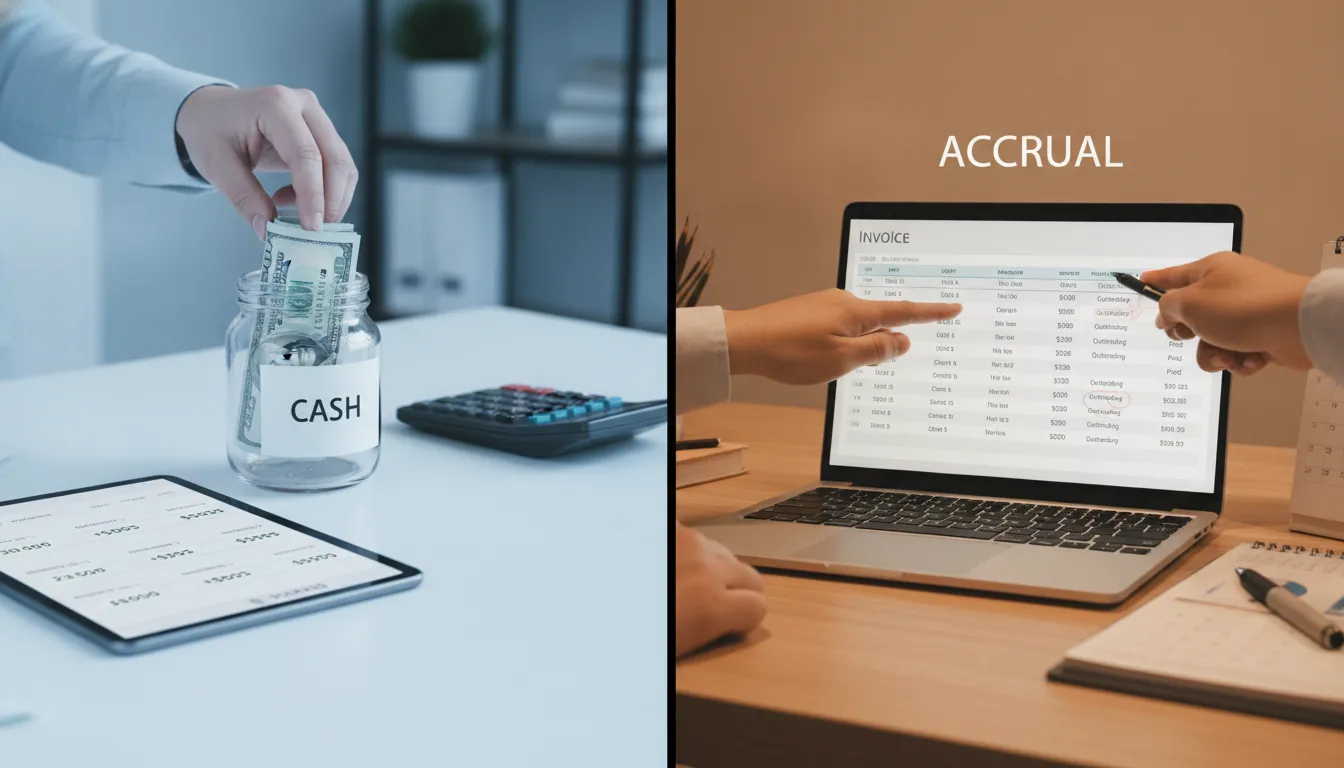
A bank balance does not tell the whole story about your business. You may have completed work that customers have not paid for, or bills that have arrived but remain unpaid. You may also hold a customer deposit that is not yet earned or pay an annual insurance bill that covers several months. These timing issues make cash vs accrual accounting an important decision for small business owners, contractors, consultants, and rental property owners. This guide breaks down how each method records revenue and expenses, what each method shows about profitability and cash flow, and how to choose an approach that supports accurate tax and financial records.
Key Takeaways
- Match the method to your business: Cash accounting may work well for service providers with prompt payments, while accrual accounting can offer clearer reporting for businesses with inventory, subscriptions, deposits, or unpaid invoices.
- Review cash and profitability separately: Use income statements alongside bank balances, accounts receivable, accounts payable, and cash flow forecasts to understand both performance and upcoming obligations.
- Plan method changes carefully: IRS eligibility rules, business structure, inventory, Form 3115, and Section 481(a) adjustments may apply. Consult Accounting Solutions, Inc. before changing your accounting method.
Cash vs. Accrual Accounting: Key Differences
Cash-basis and accrual-basis accounting answer the same basic questions, but they record financial activity at different times. Cash accounting focuses on when money enters or leaves your bank account. Accrual accounting focuses on when your business earns revenue or takes on an expense.
That timing difference can change how profitable your business appears from month to month. It can also affect tax planning, cash flow management, loan applications, and the way you evaluate a rental property or growing company. The IRS guidance on accounting methods explains that businesses must use a consistent method and follow specific rules when changing methods.
The method you choose should reflect how your business operates. A consultant who collects payment immediately may have simple bookkeeping needs, while a contractor with long payment cycles may need to track unpaid invoices and upcoming bills. Businesses with inventory, customer deposits, annual subscriptions, or rental properties may also need more detailed timing records.
Record transactions when cash changes hands
Under cash-basis accounting, you record income when your business receives payment and expenses when you pay them. The date you send an invoice, receive a bill, or sign a contract does not usually determine when the transaction appears in your books.
For example, if you complete a project in November but your customer pays in December, cash-basis accounting records the income in December. If you receive a vendor bill in November but pay it in January, the expense generally appears in January. QuickBooks explains this approach in its overview of cash and accrual accounting.
This method can be straightforward because it closely follows bank activity. However, monthly reports may not show work that has been completed but remains unpaid, or bills that have been received but are still outstanding. You may need separate lists for unpaid invoices and upcoming expenses.
Record revenue when earned and expenses when incurred
Accrual accounting records revenue when you provide a product or service, even if your customer pays later. It records an expense when your business receives the product or service or becomes responsible for the cost, even if payment happens later.
Suppose your company completes a $50,000 project in March and receives payment in May. Under accrual accounting, the revenue is recorded in March because that is when the work was completed. Under cash accounting, it is recorded in May when the money arrives. This distinction is also explained in Bank of America’s small-business accounting guide.
Accrual accounting is designed to show business activity in the period when it occurred. This can provide a clearer view of profitability when customers pay on terms, expenses cover several months, or your business carries inventory.
Track receivables, payables, and timing accounts
Accrual accounting tracks accounts receivable, which represents money customers owe you, and accounts payable, which represents bills your business owes to vendors. These accounts help you see expected collections and upcoming payments before cash changes hands.
Accrual records also track timing accounts for customer deposits, unearned revenue, prepaid insurance, and annual software subscriptions. If a customer pays before you provide a service, the payment may first be recorded as unearned revenue. It becomes income as you complete the work.
A payment made in advance may begin as a prepaid expense. The cost is then recognized over the period when your business receives the related benefit. Corpay’s explanation of accrual accounting covers how receivables, payables, and other timing items affect financial records.
Compare effects on profit, cash flow, and financial statements
Cash accounting shows the money your business actually received and paid during a specific period. This can make it useful for monitoring your bank balance and short-term cash position. However, a strong cash balance does not always mean the business earned a profit.
Accrual accounting includes receivables, payables, inventory, prepaid costs, and other obligations. Its income statement may show revenue before collection and expenses before payment. Its balance sheet can also show assets and liabilities that cash accounting may not capture in the same way.
This distinction matters when reviewing financial statements. Accrual reports can provide a fuller picture of your financial position, while cash reports make available funds easier to identify. As Corpay explains, the two methods answer different questions about your business.
Example: Invoice issued in one period and paid in another
Imagine you are a consultant who completes work for a client on March 28 and sends a $5,000 invoice with payment due in 30 days. The client pays on April 27.
With cash-basis accounting, you record the $5,000 of income in April because that is when you receive the payment. Your March income statement does not include the project, even though you completed the work during that month.
With accrual accounting, you record the $5,000 of revenue in March and record an accounts receivable balance until the client pays. When payment arrives in April, you reduce accounts receivable and increase your bank balance. The payment is not recorded as new revenue in April because the revenue was already recognized in March.
This example shows why the two methods can produce different monthly profit figures. Corpay’s accounting example explains the same timing difference using work completed in one period and paid for in another.
Example: Vendor bill incurred in one period and paid in another
Suppose your business receives a $15,000 server in November. The vendor gives you 60 days to pay, so you make the payment in January.
Under cash-basis accounting, you generally record the expense in January, when the money leaves your account. November reports may not show the cost, even though the business received and began using the server that month.
Under accrual accounting, you record the obligation in November. Depending on the server’s nature and useful life, the amount may be recorded as an asset and recognized through depreciation rather than treated as an immediate expense. The payable remains on your balance sheet until you pay the vendor.
For ordinary operating costs, accrual accounting generally records the expense when your business receives the related goods or services. Preferred CFO’s example of accrual accounting illustrates why the purchase date and payment date can differ.
Handle deposits, prepaid costs, and annual subscriptions
Customer deposits need careful treatment because receiving money does not always mean your business has earned it. If a customer pays $2,400 upfront for a 12-month service, accrual accounting may record the payment as unearned revenue first. The business then recognizes $200 of revenue each month as it delivers the service.
Prepaid costs work in the opposite direction. If you pay $1,200 for a one-year software subscription, the full payment may initially be recorded as a prepaid asset under accrual accounting. You then recognize $100 of expense each month as you use the subscription.
Cash-basis records often show the full receipt or payment when it occurs, subject to applicable tax rules and accounting requirements. Accrual records spread the activity across the periods that receive the benefit or service. This approach can make monthly reports more useful for businesses with subscriptions, retainers, annual insurance policies, or advance rent. Preferred CFO provides additional examples of prepaid expenses.
Correct common accounting misconceptions
Profit is not the same as cash. A business can report a profit under accrual accounting while waiting weeks or months to collect its invoices. It can also have cash in the bank because of a loan, customer deposit, or advance payment without having earned that money as revenue.
The reverse can happen with expenses. Your business may experience a cash shortage because several bills are due at once, even though the related costs were recorded in earlier periods. For this reason, review profit reports alongside bank balances, accounts receivable, accounts payable, and a cash flow forecast.
It is also a mistake to assume that one method is automatically better for every business. The right choice depends on your business structure, payment terms, inventory, tax requirements, and reporting goals. Accounting Solutions, Inc. can help small businesses, individuals, and rental property owners understand how each method affects bookkeeping, tax planning, and financial decisions before choosing or changing an accounting method.
How Does Cash-Basis Accounting Work?
Cash-basis accounting records income and expenses when money changes hands. Your business generally reports revenue when a customer pays and records an expense when you pay a vendor or service provider. This gives small business owners a direct view of cash moving through business accounts, which can make routine bookkeeping easier.
Unlike accrual accounting, the cash method does not generally record accounts receivable when you send an invoice or accounts payable when you receive a bill. Those items usually affect your income statement when payment occurs. You should still maintain separate records for unpaid invoices, upcoming bills, customer deposits, and credit card activity. These records help you plan cash flow, prepare tax returns, and understand what your business owes and expects to collect.
The IRS guidance on accounting methods explains how businesses select and apply an accounting method for tax purposes. Eligibility and recordkeeping requirements can vary based on your business structure, inventory, revenue, and industry. An accountant can help you determine whether the cash method fits your situation.
Record revenue when customers pay
Under the cash method, you generally record revenue when your business receives payment, not when you complete the work or send an invoice. Payment may arrive by check, cash, electronic transfer, credit card processor, or another method.
For example, suppose you complete a $1,500 project in September and invoice the customer that month. If the customer pays in October, you generally record the $1,500 as October revenue for cash-basis bookkeeping. You should still keep the September invoice and track the unpaid balance, but the invoice itself does not usually create cash-basis revenue.
This timing can make monthly sales look uneven. A business may complete substantial work in one month but show little revenue if customers do not pay until the following month.
Record expenses when you pay
Cash-basis accounting generally records an expense when your business pays it. If a vendor sends a $900 bill in March and you pay it in April, the expense usually appears in April records.
This approach can make bookkeeping easier because recorded activity often corresponds closely with bank activity. However, it can also make one month appear unusually expensive when several bills are paid at once. Those costs may relate to work performed or products used in an earlier period.
Keep receipts, invoices, payment confirmations, and other documents for every expense. The IRS recordkeeping guidance recommends retaining records that support your income, deductions, and tax filings.
Track unpaid invoices, vendor bills, deposits, and credit card purchases
Although unpaid invoices and vendor bills may not immediately affect cash-basis income, you should track them separately. Unpaid invoices show amounts customers still owe you. Unpaid bills show obligations that may soon reduce your bank balance. Reviewing both lists helps you plan collections and upcoming payments.
Customer deposits also require careful documentation. A deposit may be taxable income when received, but the correct treatment can depend on the arrangement and applicable tax rules. Record the amount, customer, date, and purpose so you can apply it correctly later.
Credit card purchases need consistent treatment, too. For tax purposes, a cash-method business may generally treat a purchase charged to a business credit card as paid when the charge occurs, even if the card balance is paid later. Your bookkeeping records should identify the original purchase, the card payment, refunds, and finance charges so you do not record the expense twice.
Monitor sales, bank activity, and payment records
Cash-basis bookkeeping works best when you compare your sales records with actual payment activity. Review customer deposits, payment processor reports, checks, refunds, and electronic transfers. Match each transaction to an invoice, sales receipt, or other supporting document.
Review money leaving the business as well. Classify payments as rent, payroll, supplies, insurance, advertising, utilities, professional services, or another appropriate category. Clear categories make tax preparation easier and show where the business is spending money.
A weekly review may be enough for a small business with limited activity. Businesses with frequent sales, multiple payment processors, or several bank accounts may need more frequent reviews. Regular monitoring can reveal missing deposits, duplicate entries, unusual charges, and payments that have not been applied to the correct customer account.
Reconcile bank and credit card accounts
Reconciliation means comparing your bookkeeping records with statements from your bank, credit card company, and payment processors. The purpose is to confirm that transactions are complete, correctly classified, and recorded in the right account.
Match deposits and withdrawals one at a time. Look for outstanding checks, bank fees, returned payments, transfers, duplicate entries, and transactions recorded on the wrong date. For credit cards, compare purchases, refunds, finance charges, and payments with the monthly statement.
Complete reconciliations at least once a month. Small errors become harder to locate when several months of activity build up. Reconciled records also provide more dependable information for payroll planning, estimated tax payments, and everyday business decisions. If your balances do not match, professional bookkeeping support can help locate and correct the difference.
Apply year-end income and expense cutoffs
Year-end cutoffs determine which payments belong in the tax year that is ending. Under the cash method, income is generally included when received, while expenses are generally recorded when paid. The timing matters when transactions occur near December 31 or January 1.
Review customer deposits, checks received by mail, electronic transfers, payment processor deposits, vendor payments, payroll, and recurring bills. Confirm when funds were actually received or made available instead of relying only on an invoice date.
Do not move income or expenses between tax years simply to change your tax result. Cash-method rules may include special provisions for constructive receipt, related-party transactions, prepaid expenses, and credit card charges. Ask your accountant to review unusual year-end items before filing. The IRS publication on accounting periods and methods provides additional guidance.
Example: Receive payment after completing the work
Imagine a Worcester contractor completes a $2,000 repair project on September 25 and sends the customer an invoice that day. The customer pays by electronic transfer on October 8.
With cash-basis accounting, the contractor generally records the $2,000 as October revenue because that is when payment was received. The September invoice does not usually create September revenue under the cash method. The contractor should keep the invoice and payment documentation, then match the October deposit to the invoice.
If the customer pays in installments, record each payment when received. Revenue may appear across several months instead of in one entry. That timing affects monthly profit reports, cash planning, and estimated tax calculations, so maintain a clear record of the original invoice, each payment date, and the remaining balance.
Maintain tax, payroll, and supporting records
Cash-basis accounting does not eliminate the need for detailed records. Keep sales receipts, invoices, deposit records, bank statements, credit card statements, canceled checks, expense receipts, payroll reports, tax filings, and payment confirmations.
Payroll deserves particular attention. Wages, payroll tax deposits, employer contributions, and payroll filings can have different timing requirements from ordinary operating expenses. Keep payroll records separate from general business spending and make required deposits on time. Accounting Solutions, Inc. can help with payroll tax services and related reporting needs.
Rental property owners should retain records for rent received, security deposits, repairs, insurance, property taxes, mortgage interest, and improvements. A repair and a capital improvement may receive different tax treatment, even if both involve money paid during the year.
Review your records throughout the year instead of waiting for tax season. Organized documentation makes it easier to prepare accurate filings, review tax obligations, and answer questions about your business or rental property.
Cash Accounting: Pros and Cons
Cash accounting records income when your business receives payment and expenses when you pay them. This straightforward method can work well for small businesses with simple finances, particularly service providers that collect payment soon after completing a job. It shows the cash currently moving through your business, which can make day-to-day decisions easier.
However, cash accounting does not show every financial obligation as it arises. Unpaid invoices, outstanding vendor bills, inventory, customer deposits, and prepaid expenses may require separate tracking. The method can also create uneven profits when payment dates do not match the timing of your work.
Before choosing cash accounting, consider your business structure, tax responsibilities, payment cycles, and reporting needs. The IRS guidance on accounting methods explains several federal rules that may affect your choice. An accountant can also help you determine whether cash accounting gives you enough information to manage the business effectively.
Simplify bookkeeping for small service businesses
Cash accounting is often a practical choice for service businesses with limited transactions. If you provide consulting, cleaning, landscaping, repair, or professional services and customers usually pay shortly after the work is complete, your records may remain relatively simple.
You record revenue when the payment arrives and record an expense when you pay the bill. You do not need to record every unpaid invoice or future vendor obligation as part of your cash-basis income statement. That can reduce monthly adjustments and make routine bookkeeping easier.
Cash accounting may also suit a sole proprietor who manages most business activity personally. Still, simple bookkeeping requires accurate receipts, bank records, payroll information, and regular reconciliations. A professional can review your records and confirm whether this method fits your business.
See cash received and paid
A key benefit of cash accounting is its direct connection to your bank balance. Your records show money customers have actually paid and expenses your business has actually covered. This helps you assess whether you have enough cash for rent, payroll, supplies, loan payments, or taxes.
For example, if you complete a $2,000 project in March but receive payment in April, cash accounting records the income in April. Until payment arrives, the unpaid invoice does not appear as revenue in your cash-basis records.
This view helps with immediate cash management, but it does not replace bank reconciliation. Compare your books with bank and credit card statements regularly to identify missing transactions or errors. The Small Business Administration’s bookkeeping guidance also recommends maintaining reliable financial records.
Use tax-timing flexibility when eligible
Cash accounting may provide flexibility in the timing of taxable income and deductible expenses. Generally, businesses using the cash method report income when they receive it and record eligible expenses when they pay them. This timing can matter when a customer payment or business expense falls near the end of the tax year.
For instance, a payment received in January may generally be reported in the year it is received, assuming your business properly uses the cash method and no special rule applies. Likewise, paying an eligible expense before year-end may place the deduction in that tax year.
Tax timing should not be the only reason to delay or accelerate a payment. Rules involving constructive receipt, prepaid expenses, related parties, and eligibility may affect the result. Review IRS Publication 538 and consult Accounting Solutions, Inc. before making year-end decisions based on timing.
Track limited information on unpaid invoices and bills
Cash accounting does not provide a complete record of what customers owe or what your business still needs to pay. If you issue several invoices but have not collected them, those amounts may not appear in your income records. A vendor bill may not appear as an expense until you pay it.
As a result, your business can appear more financially secure than it is. Your bank account may show a reasonable balance even though large bills are due soon. Or your records may show little income during a month when you completed substantial work but are waiting for payment.
You can maintain an invoice list and accounts payable schedule alongside your cash-basis books. These records help you monitor collections and upcoming obligations. They do not change your accounting method, but they provide information that cash records alone do not show.
Manage uneven profits caused by payment timing
Cash accounting can produce uneven monthly or annual results because it follows payment timing rather than when work is completed. A service business may finish several projects in one month but receive payment later. When those payments arrive together, revenue may appear unusually high in a single period.
The opposite can happen when customers pay late. Your business may complete valuable work but report little income while waiting for payment. These fluctuations can make month-to-month comparisons less useful and complicate decisions about hiring, pricing, or spending.
Review cash-basis profit alongside open invoices, completed projects, and payment history. You can prepare internal reports that show work performed and obligations incurred, even when your tax books remain on the cash method. This additional information helps you understand the business beyond its current bank balance.
Address challenges with inventory, subscriptions, and long payment cycles
Cash accounting may become less useful as a business grows more complex. Retailers and other businesses that carry inventory need to monitor purchases, sales, inventory on hand, and cost of goods sold. Recording a payment when it is made may not show when products are sold or how much they cost to generate revenue.
Subscriptions can create a similar issue. If you pay for a full year of software or insurance at once, recording the entire payment immediately can make one month look unusually unprofitable. Long payment cycles create another challenge when you complete work well before receiving payment.
Businesses with these patterns may benefit from accrual-based management records, even when cash accounting remains available for tax purposes. The IRS inventory guidance outlines rules that may apply to businesses producing, purchasing, or selling merchandise.
Forecast cash flow even with cash-basis accounting
Cash accounting provides a helpful starting point for cash flow forecasting because it shows money actually received and paid. To create a useful forecast, combine past bank activity with expected customer payments and upcoming expenses.
List your current cash balance, open invoices, recurring bills, payroll, rent, loan payments, taxes, and planned purchases. Estimate when each item will be paid, not only the total amount. A customer who usually pays 30 days after invoicing affects your forecast differently from one who pays immediately.
Update the forecast when payment dates or amounts change. Keep estimates separate from your official books so projected transactions do not get confused with completed ones. A regular forecast can reveal a future shortage early, giving you time to follow up on overdue invoices, delay discretionary spending, or discuss financing options.
Meet tax and compliance requirements
Cash accounting is not automatically available to every business. Eligibility may depend on your business structure, average annual gross receipts, inventory, and other federal rules. Certain corporations, tax shelters, and partnerships may face additional restrictions, while qualifying small businesses may have more flexibility.
After selecting a method, apply it consistently in your books and tax filings. Changing methods may require IRS approval, including Form 3115, along with an adjustment to prevent income or expenses from being counted twice or left out.
You also need records supporting payroll taxes, estimated taxes, deductions, and year-end filings. Massachusetts businesses may have state requirements in addition to federal rules. Accounting Solutions, Inc. can review your records, business structure, and reporting needs before you adopt or change your accounting method.
How Does Accrual-Basis Accounting Work?
Accrual-basis accounting records revenue when your business earns it and expenses when it incurs them. Cash does not need to change hands on the same day. This timing gives small business owners a clearer view of performance during each month, quarter, or year.
For example, suppose a Worcester contractor completes a $4,000 project in September and gives the customer 30 days to pay. Under accrual accounting, the business records the revenue in September because that is when the work was completed. When the customer pays in October, the payment reduces the customer’s balance, but it does not create new revenue.
The same principle applies to expenses. If your business receives legal, accounting, repair, or advertising services in November but pays the invoice in December, the expense belongs in November. Recording it when the obligation arises helps show the true cost of operating during that period.
Accrual accounting also tracks transactions that cash-basis records may not show right away, including accounts receivable, accounts payable, prepaid expenses, unearned revenue, inventory, and depreciation. QuickBooks explains the differences between cash and accrual accounting, including how each method affects financial reporting.
Record revenue when you provide products or services
Under accrual accounting, you record revenue when your business has earned it. That may happen when you deliver a product, complete a service, reach a project milestone, or satisfy the terms of a customer agreement. The customer does not have to pay before you recognize the income.
For example, a home improvement company completes a $4,000 renovation in September and sends an invoice due in 30 days. The company records $4,000 of revenue in September, then records the customer’s payment in October. This shows how much the company earned during September and how much remains to be collected.
The timing should reflect the work actually completed, not simply the date shown on a bank statement. Businesses handling long-term projects may need to review contracts, delivery dates, and project milestones before recording revenue.
If a customer pays before your business provides the product or service, the payment may need to be recorded as unearned revenue instead. Revenue is recognized as your business fulfills its obligations.
Record expenses when you incur obligations
Accrual accounting records an expense when your business receives the related goods or services or becomes responsible for payment. The vendor may not receive payment until a later month, but the cost still belongs to the period when your business incurred the obligation.
Suppose your business receives legal services in November and receives the invoice in December. The November financial statements should include the cost of those services. If you wait until December, November profit may appear higher than it really was, while December profit may appear lower.
This method applies to recurring costs such as rent, utilities, payroll, insurance, professional services, and repairs. If a bill has not arrived by the reporting date, your bookkeeper or accountant may record an estimated accrued expense and update it when the final invoice arrives.
Recording expenses in the proper period helps you compare revenue with the costs required to earn it. That information can support pricing decisions, budgeting, and tax planning for your business.
Track accounts receivable and accounts payable
Accounts receivable represents money customers owe your business for products or services already provided. When you issue an invoice under the accrual method, you record revenue and increase accounts receivable. When the customer pays, you reduce accounts receivable and increase cash. The payment does not create new revenue because the sale was recorded earlier.
Accounts payable represents bills your business owes to vendors and service providers. When you receive a product or service, you record the related expense or asset and increase accounts payable. When you pay the bill, you reduce accounts payable and cash.
Regularly reviewing these accounts helps you identify overdue customer balances and upcoming vendor payments. It can also reveal collection issues before they create a cash shortage. A profitable business may still face financial pressure if customers pay slowly while bills are due sooner.
Preferred CFO explains how accrual accounting tracks accounts receivable and accounts payable, including amounts earned or incurred before payment.
Manage unearned revenue, deposits, and prepaid expenses
Not every payment is revenue when it reaches your bank account. If a customer pays in advance for work your business has not completed, the amount is generally recorded as unearned revenue, also called deferred revenue. It is a liability because your business still owes the customer a product, service, or refund under the agreement.
As your business completes the work, you transfer the appropriate amount from unearned revenue to sales revenue. This prevents the income statement from showing more revenue than your business has earned. The same approach may apply to retainers, annual memberships, event deposits, and advance payments for rental-related services.
Prepaid expenses work differently. If you pay for a year of insurance, software, advertising, or internet service in advance, you initially record an asset. Each month, you transfer the portion used during that month to an expense account.
This process helps financial statements reflect when your business receives the benefit. Preferred CFO provides examples of prepaid expenses, including advance rent and software subscriptions.
Record accrued expenses, inventory, cost of goods sold, and depreciation
Accrual accounting includes more than customer invoices and vendor bills. It also covers accrued expenses, such as wages employees have earned but will receive on the next payday, interest owed but not yet paid, and utilities used before the bill arrives.
Businesses that sell products also need to track inventory and cost of goods sold. Inventory remains an asset until the products are sold. When a sale occurs, the cost of the items sold moves from inventory to cost of goods sold on the income statement. This calculation helps show gross profit more accurately.
Long-term assets require another timing adjustment. Equipment, vehicles, and qualifying improvements are usually recorded as assets and depreciated over their useful lives rather than expensed all at once. Depreciation allocates the cost across the periods that benefit from using the asset.
This treatment may be especially important for businesses and rental property owners with equipment, building improvements, or other significant assets. Accounting and tax treatment can differ, so discuss the records with your tax professional.
Make adjusting entries and reconcile accounts monthly
Accrual accounting requires regular review because payment dates do not always match the period when income is earned or costs are incurred. During a monthly close, your bookkeeping process may include entries for unpaid bills, earned but unbilled revenue, prepaid costs, depreciation, payroll, and inventory changes.
These adjusting entries place revenue and expenses in the proper period. They also keep balance sheet accounts, including accounts receivable, accounts payable, prepaid expenses, and unearned revenue, aligned with your supporting records.
Monthly reconciliations provide another important check. Compare the general ledger with bank accounts, credit cards, customer balances, vendor statements, payroll records, and inventory reports. Investigate differences instead of carrying unexplained amounts into the next month.
A consistent close process makes it easier to identify duplicate entries, missing invoices, incorrect payments, and old customer balances. Corpay explains why accrual accounting often requires more detailed month-end adjustments.
Example: Record an expense before paying the vendor
Assume your business orders a $15,000 server from a vendor in June, receives it that month, and agrees to pay the invoice in July. Under accrual accounting, the June records should recognize the transaction even though no cash has left the bank account.
If the server qualifies as a fixed asset, the business records a $15,000 increase in equipment and a $15,000 increase in accounts payable. It generally does not record the entire purchase as an immediate operating expense. Instead, the equipment is depreciated over its useful life, subject to applicable accounting and tax rules.
When the business pays the vendor in July, it reduces cash and accounts payable by $15,000. The July payment does not create a new expense or asset because the purchase was recorded in June.
If the purchase were for ordinary supplies rather than a long-term asset, the accounting entry could be different. The business might record a supply expense in June and the related accounts payable balance. The correct treatment depends on the nature, cost, and expected use of the item.
Prepare financial statements that show outstanding obligations
Accrual-based financial statements show more than cash received and cash paid. The income statement reports revenue earned and expenses incurred during the period. The balance sheet shows assets, liabilities, and owner’s equity, including customer amounts due, vendor bills, unearned revenue, loans, and accrued costs.
This information helps a small business owner assess whether reported profits are supported by customer collections, whether upcoming bills could strain cash, and whether pricing covers the full cost of delivering products or services. It can also give lenders, investors, and professional advisors a clearer picture of the business.
Accrual profit does not equal available cash. A business may report a profitable month while waiting several weeks to collect invoices. For that reason, owners should review the income statement, balance sheet, and cash flow information together.
Rental property owners can apply the same discipline by tracking rent earned, security deposits, repairs, improvements, mortgage interest, property taxes, and other obligations in separate records. Wilson CPA describes how accrual accounting provides a broader view of financial health, including receivables, payables, and the timing of related activity.
Accrual Accounting: Pros and Cons
Accrual accounting records revenue when you earn it and expenses when you incur them, even if payment happens later. This approach gives you a clearer view of what your business accomplished during a specific period. Instead of relying only on deposits and withdrawals, you can see completed work, unpaid invoices, outstanding bills, and other financial obligations.
This method can be helpful for businesses that invoice customers, carry inventory, manage subscriptions, or pay expenses before receiving related income. It can also create stronger reports for lenders, investors, and business planning. Rental property owners may benefit from the same detail when tracking rent, repairs, insurance, property taxes, and other costs.
The main drawback is complexity. Accrual accounting requires you to track accounts receivable, accounts payable, deposits, prepaid costs, depreciation, inventory, and other timing differences. It also requires regular adjustments and reviews. Accrual profit does not equal the cash available in your bank account, so you still need bank reconciliations and cash flow planning. Bank of America’s guide to cash and accrual accounting offers additional context for small-business owners comparing the two methods.
Match revenue with related expenses
One of the main benefits of accrual accounting is that it matches revenue with the expenses required to earn it. If you complete a project in March but receive payment in April, you generally record the revenue when you complete the work. Costs connected to that project, such as contractor fees or materials, are recorded when you incur them.
This approach helps you judge whether a product, service, or project was profitable during the period when the work took place. Without this matching, one month may look unusually profitable because a customer paid an older invoice. The following month may look weak because the related expenses were paid later.
As Corpay explains, accrual accounting records revenue when earned and expenses when incurred, regardless of when payment occurs. That timing gives you more useful information for pricing, staffing, and planning.
Show profitability, assets, and liabilities more fully
Cash accounting shows how much money entered or left your bank account, but it may not show everything your business has earned or owes. Accrual accounting includes accounts receivable and accounts payable, so your records reflect unpaid customer invoices and outstanding vendor bills.
For example, a business may have $20,000 in completed work that customers have not paid for yet. Under accrual accounting, that amount appears as revenue and accounts receivable. A $6,000 supplier bill that has not been paid appears as an expense and accounts payable.
Together, these records provide a fuller view of your financial position. You can see revenue, expenses, assets, and liabilities instead of relying only on your bank balance. This information can help you identify financial problems earlier and make decisions with better context.
Improve budgeting, forecasting, and management reporting
Accrual reports can provide a steadier foundation for budgets and forecasts. Because revenue and expenses are recorded in the periods they relate to, monthly results are less dependent on the exact dates customers pay or vendors process payments.
This makes it easier to compare performance from one month or quarter to the next. You can identify seasonal changes, review the cost of serving customers, and plan for recurring obligations with better context. Accrual reports may also help you decide whether to hire, purchase equipment, adjust prices, or reduce a specific expense.
For example, a landscaping company can record spring service revenue when jobs are completed, even if some customers pay later. The owner can then compare that revenue with labor, fuel, and supply costs from the same period. This creates more useful information for budgeting and forecasting than payment records alone.
Support loans, investors, and formal financial statements
Lenders and investors often want more than a bank statement. They may review your income statement, balance sheet, accounts receivable, accounts payable, and other records before deciding whether to provide funding.
Accrual accounting can present this information more clearly because it includes income earned but not yet collected, along with obligations that have not yet been paid. An outside reviewer can better assess profitability, debt, assets, and ongoing commitments.
A growing business may also need accrual-based reports for internal management, a partnership review, or a potential sale. QuickBooks explains that lenders commonly request accrual-based financial statements during financing reviews. Ask your accountant which reports a lender or investor expects before submitting an application.
Track expected collections and upcoming payments
Accrual accounting gives you a structured way to track what customers owe and what your business must pay. Accounts receivable shows unpaid customer invoices, while accounts payable shows bills owed to vendors and service providers.
This information can help you organize collection efforts and prepare for upcoming payments. An accounts receivable report may show that several invoices are past due, while an accounts payable report can identify bills due next week. You can then follow up with customers, review payment terms, and schedule outgoing payments before they become urgent.
This visibility is particularly helpful for businesses with recurring invoices or long payment cycles. A property owner, for example, can track rent receivable separately from maintenance bills, insurance, utilities, and property taxes. These records help you see expected collections and upcoming obligations in one place.
Separate accrual profit from available cash
Accrual accounting measures business performance, but it does not tell you exactly how much cash is available to spend. Revenue may be recorded before a customer pays, and an expense may be recorded before the related bill is settled.
Suppose you complete a $10,000 project in June and invoice the customer with payment due in 30 days. June revenue and profit may increase, but your bank account does not receive the money until July. If you use the June profit figure to make immediate spending decisions, you could overestimate your available cash.
Keep a separate cash view through bank reconciliations, an accounts receivable aging report, and a short-term cash flow forecast. This combination lets you review two different questions: Was the business profitable, and can it pay its bills right now?
Manage cash shortages when customers pay later
A profitable business can still face a cash shortage when customers delay payment. This risk is common in construction, consulting, professional services, wholesale, and other industries that invoice after delivering work.
Accrual accounting makes the revenue visible, but it does not make the cash arrive sooner. You still need clear payment terms, timely invoices, collection procedures, and enough cash reserves to cover payroll, rent, taxes, and suppliers while invoices remain unpaid.
Review accounts receivable regularly and separate current invoices from overdue balances. You may also consider deposits, progress billing, automatic payment options, or shorter payment terms for customers with a history of late payments. As Corpay notes in its explanation of accrual accounting, recorded revenue and collected cash are not always the same thing.
Account for bad debts, write-offs, estimates, and collection risk
Accrual accounting can show the income you earned while drawing attention to the risk that some invoices may never be collected. An outstanding receivable is not automatically the same as cash in hand, especially when a customer is experiencing financial problems or has stopped responding.
Your bookkeeping may need adjustments for bad debts, write-offs, refunds, disputed charges, or estimated uncollectible balances. These entries help prevent your financial statements from showing more receivables than you realistically expect to collect.
Review older invoices by customer and age. Ask whether each balance is still collectible, whether a payment plan is in place, or whether the account should be written off. Accounting Solutions, Inc. can help you review collection issues, document adjustments, and apply consistent procedures to your business records.
Complete additional bookkeeping, adjustments, and reviews
Accrual accounting is more detailed than cash accounting because it requires you to record transactions that do not involve an immediate payment. Depending on your business, that may include unpaid invoices, vendor bills, customer deposits, prepaid insurance, annual subscriptions, inventory, depreciation, and accrued payroll.
You may also need monthly adjusting entries to move income or expenses into the correct period. For example, a yearly insurance payment may be recorded as a prepaid asset first, then recognized as an expense over the months covered by the policy.
These records need regular review so errors do not carry into financial statements or tax filings. Reconcile bank and credit card accounts, compare subsidiary records with the general ledger, review aging reports, and investigate unusual balances. Bank of America notes that accrual accounting is more complex because it tracks unpaid and non-cash transactions. Professional bookkeeping support can help small businesses and rental property owners keep these adjustments accurate and consistent.
Which Accounting Method Fits Your Business?
The right accounting method depends on how your business earns income, pays expenses, manages inventory, and plans for growth. Cash accounting may work well for a small service business with simple transactions. Accrual accounting often gives businesses with inventory, credit sales, recurring contracts, or rental properties a more complete view of their finances.
Your tax eligibility and reporting needs also matter. Review the IRS guidance on accounting methods before choosing or changing your method. Accounting Solutions, Inc. can help you compare the effect on tax filings, payroll, cash flow, and financial statements.
Consider cash accounting for service businesses with immediate payments
Cash accounting may be a practical choice for service businesses that collect payment soon after completing the work. Consultants, cleaners, photographers, repair professionals, and other service providers may have relatively simple transactions that do not require extensive accounts receivable tracking.
Under this method, you generally record income when the customer pays and expenses when you pay them. Your bookkeeping may be easier to compare with your bank activity, although you still need to keep invoices, receipts, deposit records, and expense documentation.
Cash accounting becomes less informative when customers take weeks or months to pay, or when your business manages several contracts at once. In those situations, bank activity may not show the full value of work completed or the expenses already incurred. QuickBooks’ comparison of cash and accrual accounting explains why cash accounting often suits small businesses seeking a simple bookkeeping system.
Consider cash accounting for sole proprietors with simple transactions
Sole proprietors with few expenses, no inventory, and limited credit sales often find cash accounting manageable. If customers pay shortly after each job and you pay your bills promptly, your bank and credit card records can provide a useful foundation for bookkeeping.
You still need to reconcile accounts regularly and keep supporting records for tax preparation. Separate business purchases from personal spending, save receipts, and set aside money for estimated taxes. A simple method does not eliminate the need for accurate records.
Review your accounting method if your sales volume increases, customers request payment terms, or you begin hiring employees. Bank of America’s guide to cash and accrual accounting notes that cash accounting is commonly used by sole proprietors and other small businesses with straightforward activity.
Consider accrual accounting for inventory, credit sales, or long collection cycles
Accrual accounting may be a better fit when your business sells products, extends credit, or waits a long time to collect payment. You record revenue when you earn it and expenses when you incur them, rather than waiting for money to enter or leave your bank account.
Inventory is an important consideration. Businesses that buy and sell products generally need to track inventory and cost of goods sold so their reports show the cost associated with the products sold during each period. This can make gross profit easier to evaluate.
Accrual accounting also records an invoice when you provide the product or service, while the unpaid amount remains in accounts receivable. That gives you a clearer view of sales activity and outstanding collections. QuickBooks explains how inventory affects the choice of accounting method.
Use accrual accounting for subscriptions and deferred revenue
Memberships, retainers, prepaid packages, and annual subscriptions often require careful timing. When a customer pays in advance, your business has the cash, but you may still owe products or services over several months. The payment may be recorded as unearned revenue until you fulfill the agreement.
Accrual accounting recognizes the revenue as you provide the service. For example, a $1,200 annual subscription may be reported over the 12-month service period instead of appearing as income all at once. This gives each month a more useful picture of revenue.
The same idea applies to prepaid expenses, such as annual insurance premiums or software plans. The cost may relate to several accounting periods, even though you paid the entire bill upfront. Corpay’s explanation of accrual accounting covers how the method records revenue when earned and expenses when incurred.
Consider accrual accounting when seeking financing or detailed reports
Accrual accounting can help you prepare reports that show more than the balance in your bank account. An income statement may include earned revenue, unpaid invoices, outstanding bills, inventory, and other obligations. This gives you a better basis for evaluating profitability when cash collections vary from month to month.
Lenders and investors may also request accrual-based financial statements. These reports can help them assess sales, liabilities, operating costs, and the financial condition of the business. QuickBooks notes that lenders often require accrual-based statements for financing applications.
The method does require more regular maintenance. You may need monthly adjustments and reviews of receivables, payables, inventory, and prepaid expenses. If you plan to apply for a loan, add a partner, or prepare formal financial statements, discuss your reporting goals with an accountant first.
Evaluate payroll, recurring expenses, and customer deposits
Payroll, recurring expenses, and customer deposits can affect which method provides the clearest records. Cash accounting generally records an expense when you pay it. Accrual accounting records the obligation when employees perform the work or when you incur the vendor bill.
Customer deposits require similar attention. A deposit may not be earned revenue if you still need to provide the product or service. Recording it as unearned revenue until you fulfill the agreement can prevent your sales and profit figures from appearing higher than they are.
Review payroll liabilities, rent, utilities, insurance, software, and other recurring costs before choosing a method. Corpay identifies payroll and recurring expenses as items accrual accounting can track. Accounting Solutions, Inc. can also help connect these records with payroll tax filings and year-end reporting.
Track rent, repairs, improvements, and depreciation for rental properties
Rental property owners need more than a list of rent received and bills paid. Records should distinguish rental income, security deposits, ordinary repairs, capital improvements, loan costs, and depreciation. These items can affect both financial reports and tax filings.
A repair generally maintains existing property, while an improvement may add value or extend its useful life. The two may receive different accounting treatment. Depreciation spreads the cost of qualifying property over time rather than treating the full purchase price as a current expense.
Detailed accounting can show rent earned, unpaid amounts, recurring costs, and depreciation in a more complete way. Wilson CPA’s comparison of accrual and cash accounting discusses how financial records can include expenses such as rent and depreciation. Keep invoices, leases, payment records, and improvement documents organized by property or unit.
Separate personal, rental, and business records
Use separate bank accounts and credit cards for personal spending, business activity, and rental properties whenever possible. Avoid paying personal expenses from a business account. If a transaction includes both personal and business costs, identify and document the business portion promptly.
Separate records make it easier to reconcile accounts, measure profitability, prepare tax returns, and answer questions from a lender or tax professional. They also show whether an individual rental property is producing enough income to cover expenses and reserve needs.
If you own several properties or operate more than one business, use separate income and expense categories for each activity. Bank of America recommends separating personal and business records to support accurate financial reporting. Clear records can reduce confusion during tax preparation and help you make better spending decisions.
Identify when to switch from cash to accrual
Cash accounting may work well at first, then become difficult as your business grows. Warning signs include a growing list of unpaid invoices, more vendor bills, inventory, customer deposits, employees, recurring contracts, or long delays between completing work and receiving payment.
You may also need to reconsider your method when you acquire significant assets, apply for financing, add business partners, or want detailed monthly reports. A business can appear to have plenty of cash after collecting a large deposit while still owing money for payroll, materials, or future work.
Changing methods requires planning. You may need to account for open invoices, unpaid bills, inventory, deposits, and prepaid costs so income and expenses are not duplicated or left out. QuickBooks explains why growing businesses may move from cash to accrual accounting. Speak with Accounting Solutions, Inc. before making the change.
Separate tax reporting from accrual-based management reporting
Your tax accounting method and your internal management reports may serve different purposes. Tax returns must follow the method permitted and selected for your business. Internal reports may use accrual information to show earned revenue, unpaid obligations, and operating performance.
For example, an accrual report may show revenue from completed work even though the customer has not paid. A cash flow report should still show that the money has not arrived. Reviewing both reports helps you avoid spending funds needed for payroll, taxes, vendors, or other upcoming obligations.
Monitor accounts receivable, accounts payable, customer deposits, and available cash regularly. Corpay recommends tracking cash flow separately from reported revenue and profit, especially when a business uses accrual accounting. This gives you practical information for daily decisions while keeping tax reporting consistent with your selected method.
What IRS Rules Apply to Cash vs. Accrual Accounting?
The IRS does not allow every business to choose any accounting method without restrictions. Your eligibility may depend on average gross receipts, inventory, business structure, and whether your method clearly reflects income. The method you use also determines when you report revenue and deduct expenses on your federal tax return.
Small businesses should review these rules before choosing or changing a method. The IRS guidance on accounting periods and methods explains the federal requirements. Your records may also need to support Massachusetts tax filings, lender requests, financial statements, and other reporting needs. Accounting Solutions, Inc. can help you review the rules that apply to your business before you make a change.
Apply the cash-method gross receipts test and inflation-adjusted threshold
Many eligible small businesses can use the cash method if they meet the IRS gross receipts test. This test generally looks at the business’s average annual gross receipts for the previous three tax years. If the average falls below the inflation-adjusted threshold, the business may qualify for cash accounting for federal tax purposes.
For some tax years, the threshold is approximately $31 million, but the exact amount can change. Always confirm the limit that applies to your tax return. Meeting the gross receipts test does not remove other requirements related to inventory, corporations, tax shelters, or certain partnerships.
Cash-method eligibility may work well for a small service business that collects payments soon after completing work. However, eligibility is only one part of the decision. You should also consider whether cash accounting gives you enough information about unpaid invoices, upcoming bills, and actual profitability.
Calculate average annual gross receipts
The gross receipts test uses a three-year average, not just the sales reported for the current year. Add the business’s gross receipts for the three tax years before the year being tested, then divide the total by three. If the business operated for only part of that period, special rules may apply, including annualizing receipts for a short tax year.
Gross receipts generally represent the total amounts connected to the business before subtracting expenses. Depending on the business, they may include sales, service revenue, rents, interest, and other income. Do not rely only on bank deposits. Review your tax returns, sales records, accounting system, and other revenue accounts when completing the calculation.
The IRS adjusts the threshold for inflation, so the applicable amount may change. Keep a written calculation with your tax records and review the IRS revenue procedure library for current guidance. Your accountant can also confirm which years and receipts belong in the calculation.
Review inventory rules and small-business exceptions
Businesses that buy or make products for resale face additional accounting considerations. Retailers, wholesalers, manufacturers, restaurants, and other inventory-based businesses generally need a method that accounts properly for inventory and cost of goods sold. A business cannot automatically use cash accounting just because its receipts fall below the gross receipts threshold.
Certain eligible small businesses may qualify for exceptions when inventory is not a material income-producing factor. Other businesses may treat inventory as nonincidental materials and supplies if they meet the applicable requirements. How you record purchases, sales, and ending inventory still matters.
A home-based business selling a limited number of handmade products may have different facts from a store carrying a large volume of merchandise. Review inventory levels, purchasing cycles, margins, and year-end stock before choosing a method. The IRS inventory rules provide additional detail.
Follow rules for C corporations, tax shelters, and certain partnerships
Some business structures have less access to cash accounting. For example, a C corporation with average annual gross receipts above the applicable threshold generally must use accrual accounting unless an exception applies. Personal service corporations may receive different treatment, so the corporation’s activities, ownership, and income sources should be reviewed carefully.
Tax shelters also face restrictions. Certain partnerships may need to use accrual accounting when a C corporation is a partner. These rules can apply even when the business is privately owned or has relatively few employees. A change in ownership or legal structure may also affect the accounting method the business is allowed to use.
Do not assume that sole proprietorships, partnerships, S corporations, and C corporations follow identical rules. Before incorporating, admitting a corporate partner, or changing entity types, ask your accountant how the change may affect your tax reporting and bookkeeping requirements.
Identify when accrual accounting becomes mandatory
Accrual accounting may become mandatory when a business does not qualify for a cash-method exception, has inventory that materially produces income, exceeds the applicable gross receipts limit, or falls under special rules for corporations, tax shelters, or partnerships. The IRS may also require a change if the existing method does not clearly reflect income.
For example, a business with substantial unpaid invoices may need to report revenue when it earns that revenue rather than waiting for customer payment. A business with significant unpaid vendor bills may also need to recognize expenses when it becomes obligated to pay them.
Accrual accounting does not require every business to use the same level of detail. The method should fit the company’s transactions while consistently reflecting income and expenses. Review your situation carefully if your business is growing, offering longer payment terms, or carrying significant inventory.
Follow federal, Massachusetts, lender, and financial reporting rules
Federal tax rules are only one part of the decision. Massachusetts may have its own filing requirements and adjustments, and state reporting may not always mirror federal treatment. Ask your tax professional whether your accounting method creates state-specific issues for your business or individual return.
Lenders, investors, and other financial partners may also request accrual-based financial statements. A bank reviewing a loan application may want to see accounts receivable, accounts payable, inventory, recurring obligations, and debt, even if your business files its tax return using the cash method.
Public companies and businesses with formal financial reporting obligations generally use accrual accounting under applicable standards. Smaller businesses may not face the same requirements, but accrual-based management reports can still provide a clearer view of sales, margins, debt, and upcoming obligations. Keep tax reports and internal reports clearly labeled.
Use accounting methods consistently on tax returns and records
After choosing an accounting method, apply it consistently. Your invoices, deposits, expense records, payroll information, bank reconciliations, and tax returns should support the method you report. Switching between cash and accrual treatment from one transaction to another can distort income and create questions during an IRS review.
Consistency does not mean your records can never change. You may need to change methods as the business grows, the law changes, or the current method no longer clearly reflects income. Handle an approved or required change through the proper IRS process instead of changing settings informally in your bookkeeping software.
Keep written notes explaining how your business treats customer deposits, prepaid insurance, credit card purchases, unpaid invoices, and vendor bills. The IRS recordkeeping guidance can help you maintain records that support your tax return.
Plan for effects on estimated taxes, payroll taxes, and year-end filings
Your accounting method can change the timing of taxable income and deductible expenses. That timing may affect quarterly estimated tax payments, owner distributions, cash reserves, and the amount you expect to owe with your annual return. A business can report a profit while facing a cash shortage if customers have not paid their invoices.
Payroll taxes require separate attention. Employee wages, employer payroll taxes, and related liabilities must be recorded and paid according to their deadlines, regardless of whether the business uses cash or accrual accounting for income tax purposes. Keep payroll records separate from general cash flow planning.
Year-end work may include reviewing unpaid invoices, vendor bills, customer deposits, prepaid expenses, inventory, depreciation, and payroll accruals. Before filing, confirm that the bookkeeping records match the tax method and that no income or expense has been recorded twice. A method change may require IRS Form 3115, a Section 481(a) adjustment, or other transition steps, so consult Accounting Solutions, Inc. before making the change.
How to Choose, Change, and Manage an Accounting Method
Choosing an accounting method affects how your business reports income, expenses, profit, and taxable income. The right choice depends on how customers pay you, when you receive bills, whether you carry inventory, and how much detail you need for planning or financing.
Cash accounting may suit a small service business with quick customer payments and few outstanding bills. Accrual accounting often makes more sense when you sell on credit, manage subscriptions, carry inventory, or have significant unpaid expenses. Your tax method and internal reporting method may differ in some situations, but both should be organized and applied consistently.
Changing methods requires more than updating a bookkeeping setting. The change can affect taxable income, financial statements, payroll planning, and estimated tax payments. Review the IRS guidance on accounting methods and speak with an accounting professional before making a decision.
Compare unpaid invoices, bills, inventory, deposits, and prepaid costs
Start by listing the transactions that create timing differences in your business. These may include unpaid customer invoices, vendor bills, inventory purchases, customer deposits, prepaid insurance, annual software subscriptions, and credit card charges.
Accrual accounting generally records revenue when earned and expenses when incurred, even when payment has not occurred. That makes accounts receivable and accounts payable important parts of the bookkeeping process. Cash accounting focuses on actual receipts and payments, so it may be easier to manage when your business has few unpaid items.
Review these timing accounts before choosing a method. A business with long payment cycles may appear profitable while waiting weeks or months for customer payments. Likewise, a business with large unpaid bills may underestimate upcoming cash needs. This comparison of cash and accrual accounting explains how timing affects financial records.
Evaluate taxes, cash flow, reporting goals, and growth plans
Your accounting method should support tax compliance and everyday decision-making. Cash accounting can make short-term cash activity easier to follow and may provide tax-timing flexibility when your business qualifies. Accrual accounting can show revenue and expenses in the periods they relate to, giving you a more useful view of profitability.
Consider where your business is heading, not only how it operates today. You may need more detailed reports if you plan to apply for a loan, bring in investors, add employees, offer payment terms, or expand into inventory. Lenders may want financial statements that show unpaid obligations and expected collections.
Also consider whether customer payment timing causes large changes in monthly results. If it does, accrual reporting may help you understand performance, while a separate cash flow report shows whether you can pay current obligations. Small business accounting guidance can help you compare these factors.
Confirm eligibility and requirements before changing methods
Do not change your accounting method based only on convenience. Tax rules may limit your options based on business structure, gross receipts, inventory, and industry. Businesses that manufacture, purchase, or sell inventory may face accrual accounting requirements, although certain small-business exceptions may apply.
Corporations, partnerships, and tax shelters may also have additional requirements. Review federal rules along with any reporting expectations from Massachusetts, lenders, investors, or other stakeholders. Confirm whether your tax return uses the same method as your bookkeeping records.
A method change may require IRS approval and can affect taxable income for the year of the change. Review the IRS guidance on accounting periods and methods before taking action. An accountant can help determine whether your business qualifies for a specific method and whether exceptions apply.
File Form 3115 and apply Section 481(a) adjustments when required
Some accounting method changes require IRS consent. Businesses generally request consent by filing Form 3115, Application for Change in Accounting Method. The form documents your current method, proposed method, and reason for the change. Filing requirements can vary, so review the current instructions before preparing it.
A change may also require a Section 481(a) adjustment. This adjustment accounts for income or expenses that could otherwise be reported twice or omitted during the transition. Depending on the amount and type of adjustment, the business may recognize it in one year or over several years.
Do not estimate this adjustment casually. Your accountant should review opening balances, prior tax treatment, and the filing deadline before the form is submitted. Proper preparation can prevent an unexpected tax bill or an incomplete change request.
Reconcile opening receivables, payables, inventory, and prepaid costs
Before using the new method, establish accurate opening balances. For accounts receivable, compare every unpaid invoice with customer records and confirm whether the balance remains collectible. For accounts payable, review vendor statements, unpaid bills, credit card charges, and expenses incurred before the change date.
Inventory requires additional care. Count the items on hand, verify purchase costs, and identify damaged or obsolete stock. Also list customer deposits, prepaid insurance, annual subscriptions, and other costs that cover future periods. These balances may receive different treatment after the method changes.
Create a written reconciliation showing how each opening balance was calculated. Keep invoices, contracts, bank statements, inventory counts, and vendor records with your accounting files. A careful opening reconciliation gives you a reliable starting point and makes later reviews much easier.
Prevent duplicate or missing income and expenses during the transition
The main transition risk is recording the same transaction twice or leaving it out entirely. For example, a customer payment may already be included under cash accounting, while the related invoice is later recorded again under accrual accounting. A vendor bill can create the same problem if it was paid before the change and then entered again during the review.
Prepare a list of transactions recorded under the old method. Note when each item should appear under the new method, then pay close attention to customer deposits, credit card purchases, payroll, inventory, prepaid expenses, and unpaid bills.
A Section 481(a) adjustment addresses required timing differences, but your bookkeeping records still need clear transaction-level support. Use a transition checklist and ask another person to review it before closing the first reporting period under the new method.
Set up invoicing, bill tracking, reconciliations, and the chart of accounts
Your bookkeeping system should reflect the method you choose. If you use accrual accounting, set up accounts receivable, accounts payable, inventory, prepaid expenses, accrued expenses, and deferred revenue. Establish procedures for entering invoices and bills promptly, then apply customer payments to the correct invoices.
Review your chart of accounts so it clearly separates income, direct costs, operating expenses, assets, liabilities, and owner activity. Schedule monthly bank and credit card reconciliations, then compare outstanding invoices and bills with your supporting records.
Even with accrual accounting, maintain a cash flow report. Reported profit does not show exactly how much money is available for payroll, rent, taxes, and vendor payments. The IRS recordkeeping guidance offers a useful starting point for organizing financial documents.
Document and apply your accounting method consistently
Write down the method your business uses for tax reporting and bookkeeping. Your documentation should explain how you record sales, expenses, deposits, inventory, prepaid costs, credit card activity, payroll, and year-end adjustments. Include the date the method began and note any approved changes.
Consistency matters because changing treatment from one period to the next can distort profit and taxable income. For example, recording an annual subscription as a full expense in one year and spreading it over several months in another makes financial comparisons less useful.
Train anyone who enters transactions, including an employee, bookkeeper, or outside service provider. Review the records regularly to confirm that everyone follows the same procedures. If a transaction does not fit your written policy, ask your accountant how to handle it before recording it.
Monitor cash flow with accrual accounting
Accrual accounting can show profit before customers pay their invoices. That information helps you measure performance, but it does not tell you whether the business has enough cash to cover payroll, rent, taxes, and vendor payments.
Keep a separate cash flow report showing actual deposits, withdrawals, upcoming bills, and expected collections. Review an accounts receivable aging report each month, follow up on overdue invoices, and identify balances that may become uncollectible. Also review accounts payable to see which bills are due soon.
Compare your cash forecast with your accrual income statement so you can spot gaps early. A business may report strong revenue while facing a temporary cash shortage. This review is especially important for seasonal businesses, companies with long collection periods, and businesses that receive large customer deposits.
Coordinate bookkeeping, payroll taxes, estimated taxes, and year-end returns
An accounting method change can affect more than your income statement. Coordinate the change with payroll records, sales records, estimated tax payments, and year-end tax returns. Under accrual accounting, taxable revenue may be recognized when earned even if the customer has not paid, depending on the applicable tax rules.
That timing can create a tax liability before the related cash arrives. Keep payroll tax filings and payroll reports separate from ordinary bookkeeping, then reconcile them regularly. Review customer deposits and unearned revenue before preparing year-end returns.
Your accountant should also confirm that the method used on federal and Massachusetts filings agrees with the records supporting those returns. Planning ahead can help prevent unexpected balances, late adjustments, and rushed corrections at tax time.
Consult Accounting Solutions, Inc. before choosing or changing methods
A conversation with Accounting Solutions, Inc. can help you compare the practical and tax effects of each method before making a change. The team can review unpaid invoices, vendor bills, inventory, deposits, prepaid expenses, business structure, and reporting goals.
Professional guidance can be especially helpful for Worcester-area small businesses, rental property owners, and individuals managing business and personal records at the same time. Rental owners may need to separate rent income, repairs, improvements, mortgage interest, depreciation, and personal expenses.
Accounting Solutions, Inc. can also help coordinate bookkeeping, payroll tax payments, estimated taxes, year-end filings, and documentation for an accounting method change. If Form 3115 or a Section 481(a) adjustment may apply, bring recent financial statements, bank records, open invoices, vendor statements, and prior tax returns to your consultation.
Frequently Asked Questions
What is the main difference between cash and accrual accounting?
Cash accounting records income and expenses when money changes hands. Accrual accounting records revenue when it is earned and expenses when they are incurred, even if payment happens later. The better option depends on your business activity, tax requirements, payment timing, and reporting needs.
Is cash accounting a good choice for every small business?
Not always. It may work well for a small service business with few transactions, no inventory, and customers who pay quickly. It may be less useful for businesses with long collection periods, inventory, customer deposits, subscriptions, or significant unpaid bills.
Why might a business choose accrual accounting?
Accrual accounting can show a more complete view of profitability by including unpaid invoices, outstanding bills, inventory, prepaid costs, and customer deposits. It may also provide the detailed financial statements lenders, investors, or business partners expect.
Can I use cash accounting for taxes and accrual accounting for internal reports?
In some cases, yes. A business may use its permitted tax method while preparing accrual-based management reports for budgeting, pricing, and performance reviews. Keep the two systems clearly labeled and reconcile them consistently so income and expenses are not duplicated or omitted.
Can Accounting Solutions, Inc. help me change accounting methods?
Yes. Accounting Solutions, Inc. can review your business structure, gross receipts, inventory, invoices, bills, deposits, and reporting goals. The team can also help with opening balances, IRS method-change requirements, bookkeeping procedures, payroll tax records, and financial reporting for businesses and rental property owners.